

Embroidered Blankets for Children’s Rooms: Cozy & Timeless
- baby blankets
- baby room textiles
- baby shower gift ideas
- children room accessories
- cozy nursery
- embroidered baby blanket
- embroidered blankets
- embroidery for newborns
- handmade baby gifts
- handmade nursery items
- kids bedding decor
- kids room interior
- nursery decor
- nursery design ideas
- nursery embroidery
- personalized baby blanket
- soft textiles for kids
- teddy bear embroidery
- washable baby textiles

By diver361
- 399 views
- View diver361's images
Embroidered Blankets in a Child’s Room: Warmth, Story & Style 🧸✨
An embroidered blanket in a nursery is more than a cozy layer. It’s a design accent, a keepsake, and often the first textile a child bonds with. When done right, embroidery elevates a simple blanket into a piece that tells a story—soft to touch, safe to use, and beautiful to look at 💛
Below is a systematic guide: from creation challenges and newborn safety to sizing, design choice, materials, and care—plus real-world tips from sellers and designers.
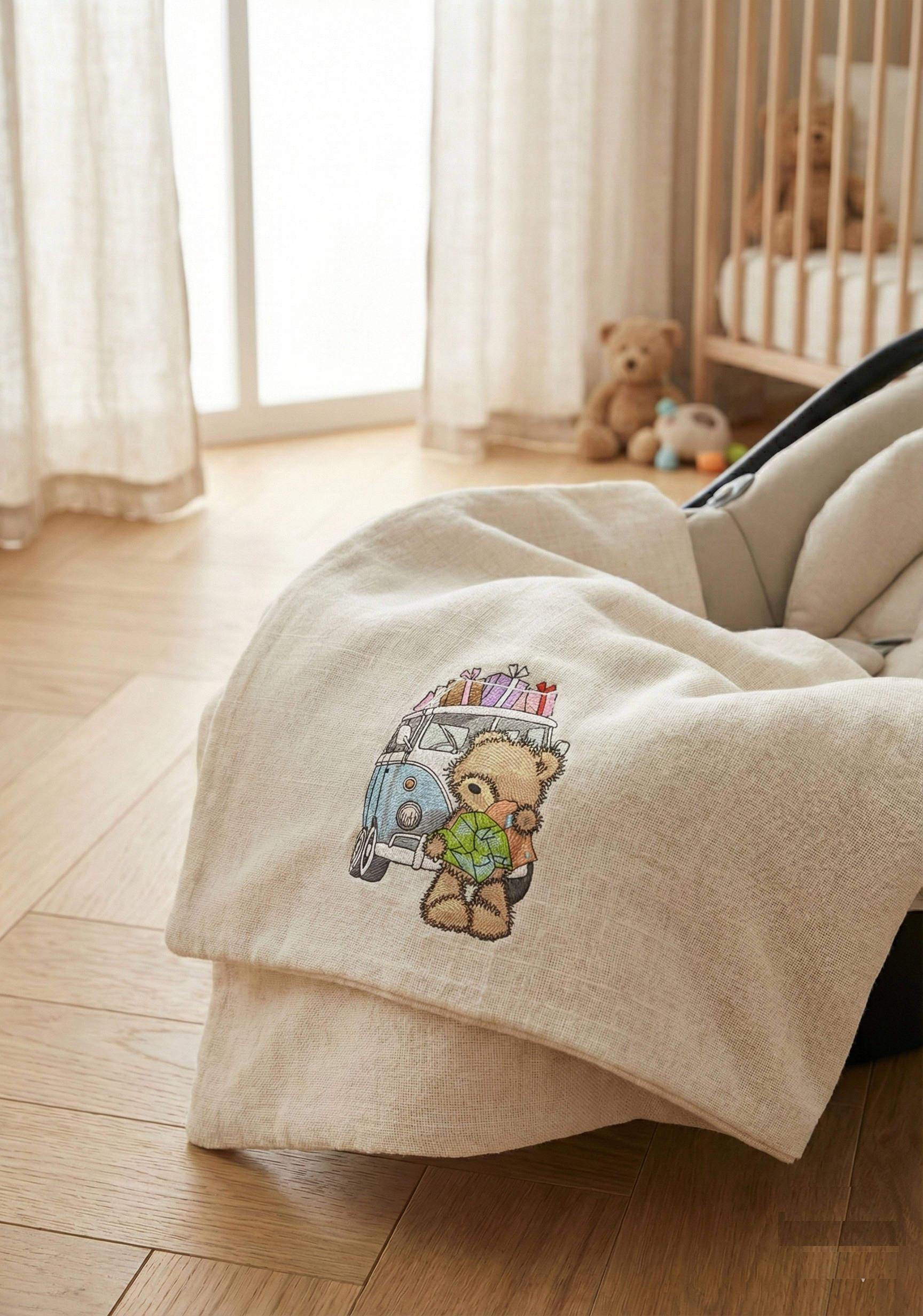
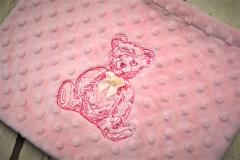
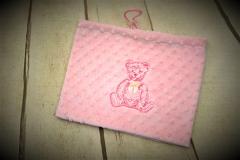
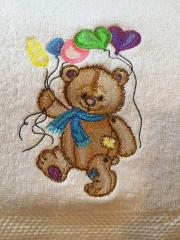
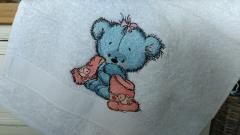
Design inspiration example (as requested):
👉 Teddy bear with map near to minibus embroidery design
🧠 Are There Challenges in Making Embroidered Blankets?
Yes—but they’re solvable with the right plan.
Common challenges
Keeping the blanket soft and flexible after stitching
Preventing puckering on layered fabrics
Ensuring baby-safe finishes (no scratchy backs)
Choosing embroidery that remains visible without making the blanket stiff
DESIGNER TIP: Digitize for softness, not maximum density. Open fills and gentle outlines keep the blanket drapey and cuddly.
🪡 Why Embroidery Is Better Than Prints on Blankets
Prints fade and crack. Embroidery lasts—and feels special.
Why embroidery wins
✔ Wash-resistant and durable
✔ Tactile (babies love textures)
✔ Premium, handmade look
✔ Easy to personalize (names, dates)
Embroidery turns a blanket into a memory piece, not just décor 🧵✨
👶 How to Make an Embroidered Blanket for a Newborn
Newborns need softness first.
Best practice
Choose baby-safe fabrics (pre-washed).
Embroider before final assembly (on the top layer only).
Use a soft backing to cover stitches on the reverse.
Keep designs light and centered—no heavy blocks.
CRITICAL NOTE: Never place dense embroidery where the baby’s face rests. Comfort and airflow come first.
🎨 Choosing a Stylish Design That Grows With the Child
Think beyond “baby-only.” The best designs age gracefully.
Design directions that last
Soft animals with gentle expressions 🧸
Storybook scenes (travel, clouds, stars) ✨
Minimal line art in calm palettes
Neutral backgrounds with one playful accent
Avoid
Overly bright neon fills
Tiny text that disappears after washes
Very trendy motifs that date quickly
SELLER INSIGHT: Parents prefer designs that still look good at age 3–5. “Grows-with-you” aesthetics sell better.
📍 Where to Place Embroidery on a Blanket
Placement affects both visibility and comfort.
Best placements
Upper center (visible in cribs and photos)
One corner (classic, lightweight, elegant)
Wide border accent (for larger blankets)
Avoid
Dead center for very dense designs (can stiffen the drape)
📏 Average Blanket & Embroidery Sizes
Common blanket sizes
Newborn: 70×90 cm (27×35")
Baby: 90×120 cm (35×47")
Toddler: 100×140 cm (39×55")
Recommended embroidery sizes
Newborn: 10–14 cm (4–5.5")
Baby/Toddler: 14–22 cm (5.5–8.5")
Rule of thumb: Big enough to read, light enough to cuddle.
🧵 What to Know Before Stitching
Pre-wash all fabrics (shrinkage control)
Stabilize only the top layer
Test stitch on scraps
Use colorfast threads
Finish the back with soft fusible cover
PRACTICAL TIP: If the embroidery feels stiff after stitching, density is too high. Comfort beats sharpness on baby blankets.
🧶 Materials Comparison (Pros & Cons)
Material | Pros | Cons |
|---|---|---|
Cotton muslin | Breathable, baby-safe | Needs gentle stabilization |
Cotton jersey | Soft, stretchy | Can distort without cut-away |
Fleece | Warm, cozy | Can “swallow” fine details |
Minky | Ultra-soft, luxurious | Slippery; requires topper |
Quilted cotton | Structured, premium | Heavier feel |
Best stabilizers
Light cut-away (top layer only)
Water-soluble topper for nap fabrics
Soft fusible backing for the reverse
🧼 Care & Washing
Gentle cycle, cold water
Mild detergent
Air dry or low heat
Avoid fabric softeners (can dull threads)
CARE NOTE: A well-embroidered blanket should look the same after 20+ washes. Test once before gifting or selling.
🔍 What We See Online (Market Signals)
Animals + story themes dominate sales
Neutral bases with one accent color convert best
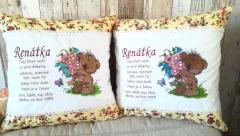
Personalization increases value
Sets (blanket + pillow/basket) photograph beautifully 📸
Typical price range: $45–$120, higher with personalization.
❤️ Final Thoughts
An embroidered blanket brings warmth, story, and intention into a child’s room. With the right materials, placement, and a gentle design—like a teddy on a little journey—you create something parents keep long after the nursery years 🧸🌟
Recommended Comments
Join the conversation
You can post now and register later. If you have an account, sign in now to post with your account.