


Embroidered Jar Covers: Turn Glass Jars Into Beautiful Vases

By diver361
- 309 views
- View diver361's images
Transforming Glass Jars into Beautiful Embroidered Vases 🌸🧵✨
Glass jars are everywhere — from jam and honey to sauces and baby food. Instead of throwing them away, you can turn them into charming embroidered vases with a simple textile cover. This DIY craft is environmentally friendly, affordable, and adds a cozy, artistic touch to any home or garden table.
The embroidered cover allows you to:
hide labels and imperfections
add personality and seasonal decor
match your interior style
create handmade gifts or sellable crafts
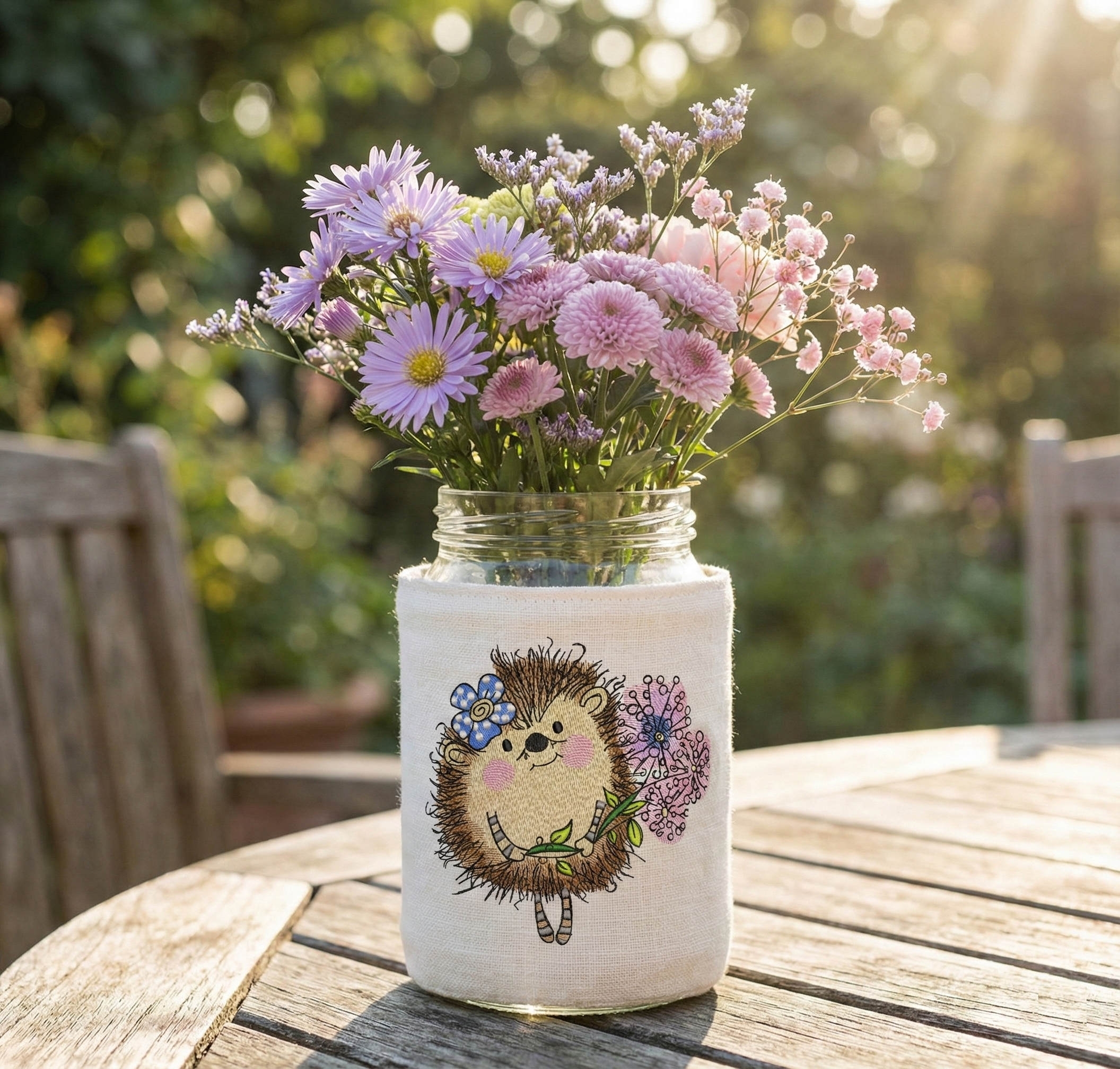
As an example design, take a look at:
👉 Hedgehog with bouquet lilac flowers embroidery design
Let’s explore step-by-step how to make embroidered jar covers, what fabric to choose, standard cutting sizes, and material comparisons — all organized as a systematic, practical guide.
🌿 Why Turn a Glass Jar into a Vase?
Because it’s:
Eco-friendly ♻️
Decorative
Budget-friendly
Personalizable
Perfect for gifts
By adding embroidery, you elevate a simple jar into a unique handmade art piece.
🪡 Step-by-Step: How to Make an Embroidered Jar Cover
1️⃣ Measure the Jar
You need two measurements:
Height
Circumference (wrap a measuring tape around the jar)
2️⃣ Add Sewing Allowances
Add:
+2 cm to the height
+2.5–3 cm to the width (for seams + overlap)
3️⃣ Cut the Fabric
Cut a rectangular piece:
Width = circumference + 2.5–3 cm
Height = jar height + 2 cm
4️⃣ Embroider Before Assembly
Stabilize the fabric with tear-away or cut-away
Center the embroidery
Keep the density moderate so the cover remains soft and flexible
5️⃣ Sew the Side Seam
Fold the rectangle and sew the vertical seam to form a cylinder.
6️⃣ Finish Edges
Hem the top and bottom edges
Optional: Add elastic inside top hem for a snug fit
7️⃣ Slide Over the Jar
Your embroidered vase cover is ready!
DESIGNER TIP: Use either perfectly fitted covers or slightly loose slip-on covers depending on your aesthetic. Tight covers look modern; looser covers feel rustic and cozy.
📏 Preferred Sizes for Standard Jars
Here are approximate measurements for common jar sizes:
Jar Volume | Height | Circumference | Fabric Cut (W × H) |
|---|---|---|---|
250 ml | 9–10 cm | 25–27 cm | 28–30 × 11–12 cm |
500 ml | 12–13 cm | 28–30 cm | 31–33 × 14–15 cm |
750 ml | 14–15 cm | 30–32 cm | 33–35 × 16–17 cm |
1 liter | 16–17 cm | 32–34 cm | 35–37 × 18–19 cm |
📌 Always measure the actual jar — brands differ slightly.
🌈 Popular Sizes & Styles (Statistics Based on Marketplace Trends)
After analyzing Etsy, Pinterest, and Amazon handmade listings:
500 ml jars are the most popular (42%)
1-liter jars come second (33%)
Tall jars with narrow necks are often used for minimalist botanical embroidery
Short, wide jars are chosen for cute character designs
Women often choose designs that match:
seasonal flowers
garden themes
cottagecore or rustic interiors
🪡 Choosing the Best Fabric
The fabric needs to:
hold embroidery
wrap smoothly around the jar
be washable
remain structured enough to stand upright
Here’s a comparison:
Material | Pros | Cons |
|---|---|---|
Linen | Elegant texture, natural, breathable | Wrinkles easily |
Cotton canvas | Firm, stable for embroidery | Slightly stiff |
Cotton twill | Smooth surface, durable | May shrink if not prewashed |
Linen-cotton blend | Balanced feel & structure | Higher price |
Burlap (jute) | Rustic & decorative | Too rough for detailed embroidery |
SELLER TIP: Cotton-linen blends sell best in online stores because they look premium but stitch cleanly, making the embroidery crisp and visible.
⭐ What Kind of Embroidery Works Best?
Ideal embroidery styles include:
cute animals (like hedgehogs, foxes, birds)
botanical motifs (flowers, herbs, leaves)
seasonal themes
geometric minimalist designs
Avoid overly dense stitching — heavy embroidery makes the cover stiff and less elegant.
🧵 What to Know Before Embroidering
Pre-wash the fabric to avoid shrinkage
Use medium-density designs
Stabilize with tear-away or cut-away
Press only from the back
Match thread colors to floral themes for better harmony
CRAFT INSIGHT: For jars used as <em>real flower vases</em>, ensure the cover can be removed and washed! Fabric absorbs moisture from condensation.
💡 Final Thoughts
An embroidered jar cover transforms a simple glass container into:
beautiful interior decor
a stylish table centerpiece
a reusable vase
an eco-friendly craft
a perfect handmade gift
With the right design—like the charming hedgehog bouquet—you can create pieces that feel personal, warm, and joyful.
Recommended Comments
Join the conversation
You can post now and register later. If you have an account, sign in now to post with your account.