

Embroidered Linen Aprons for the Kitchen: Design, Materials

By diver361
- 103 views
- View diver361's images
Embroidered Linen Kitchen Aprons: Where Craft Meets Everyday Beauty 🧵✨
Embroidered linen kitchen aprons are no longer just practical workwear — they’ve become a statement of style, personality, and handmade care. From cozy home kitchens to artisan bakeries and gift boutiques, linen aprons with embroidery are everywhere. But how востребованы (in demand) are they really? And how hard are they to make?
Let’s explore this step by step — like a true craft study 🍞🪡
Why Linen Aprons with Embroidery Are So Popular 💛
Linen aprons sit perfectly at the crossroads of function + aesthetics.
📊 Market demand (based on handmade platforms & boutiques):
Linen aprons are among the top 5 kitchen textile gifts
Embroidered aprons sell 30–40% better than plain ones
Personalized or illustrated embroidery increases perceived value by up to 60%
Why buyers love them:
Natural, breathable fabric
Timeless, eco-friendly look
Easy to personalize (names, motifs, illustrations)
Perfect for gifts 🎁
✨ An embroidered apron feels less like “kitchen gear” and more like a wearable artwork.
Is It Difficult to Make an Embroidered Linen Apron? 🧠🪡
Moderate difficulty — ideal for confident beginners and professionals.
Main challenges:
Linen shifts easily in the hoop
Embroidery placement must account for body movement
Fabric wrinkles need pre-treatment
Good news:
With the right stabilizer and preparation, linen behaves beautifully and ages better than cotton.
Average Apron Size & Best Embroidery Dimensions 📐
👗 Standard adult apron size:
Width: 65–75 cm (25–29 in)
Height: 80–90 cm (31–35 in)
🧵 Recommended embroidery size:
Chest motif: 12–18 cm (5–7 in)
Center panel illustration: 18–25 cm (7–10 in)
Pocket embroidery: 8–12 cm (3–5 in)
🔑 Key rule: Linen shines when embroidery has space to breathe — avoid overcrowding.
Where to Place Embroidery for Maximum Impact 👀
✔ Upper chest (classic & elegant)
✔ Center front (statement piece)
✔ Pocket or corner detail (subtle charm)
🚫 Avoid:
Waist folds
Side seams
High-friction areas
What Else Can You Add to an Apron? 🎀🧷
Small details turn a simple apron into a premium product:
Front pocket (embroidered or contrasting fabric)
Wooden or metal hardware
Adjustable neck strap
Leather or linen ties
Contrast stitching
Hanging loop for towels
💡 Customers often choose an apron because of details, not the base pattern.
Materials Comparison Table 📋
Material | Pros | Cons |
|---|---|---|
Linen | Breathable, durable, premium look | Wrinkles, higher cost |
Cotton Canvas | Easy to embroider, stable | Less breathable |
Cotton Twill | Affordable, smooth | Wears faster |
Linen-Cotton Blend | Balanced texture & stability | Less “pure linen” appeal |
Polyester | Low cost, wrinkle-free | Not eco-friendly, less artisanal |
Best choice:
👉 Medium-weight washed linen (180–220 g/m²)
🎯 Designer & Seller Tips (Expert Callouts)
🧵 Designer Tip:
Use lighter stitch density on linen — the texture itself adds beauty.
🛍 Seller Tip:
Customers pay more when embroidery tells a story, not just decorates.
🎁 Gift Market Insight:
Illustrated or sketch-style embroidery performs best for aprons.
Choosing the Right Embroidery Design 🎨
Linen pairs best with:
Sketch-style illustrations
Vintage drawings
Botanical motifs
Soft cartoon lines
Minimalist animals
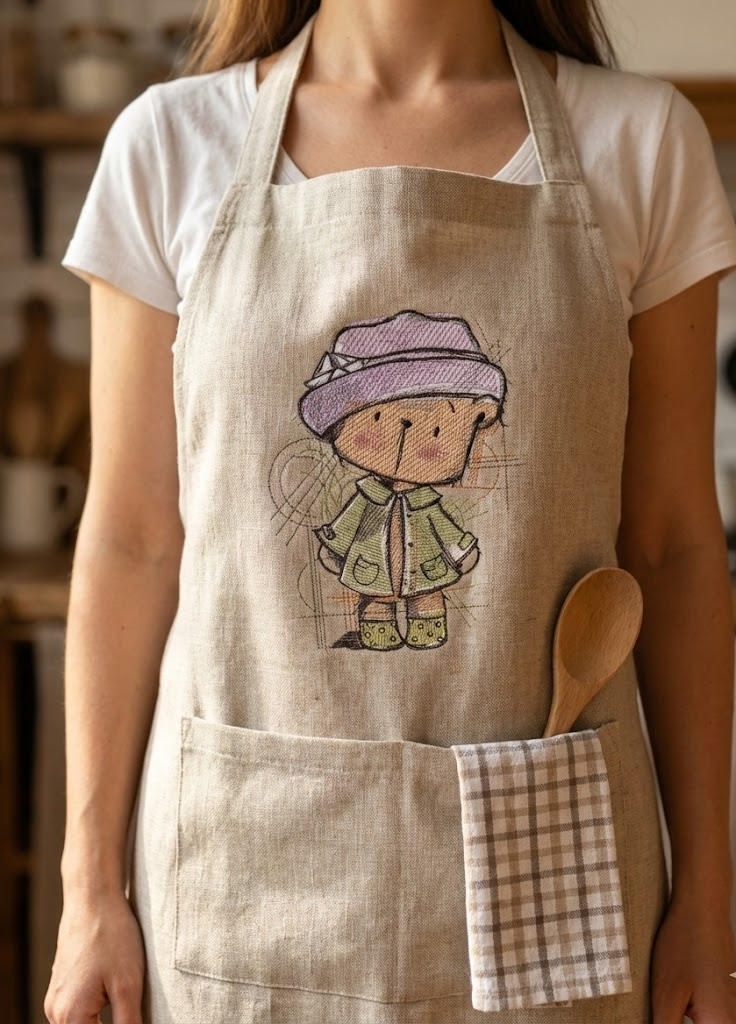
A perfect example of this style is the
Teddy Bear Sketch Vintage Free Embroidery Design – Classic Hand-Drawn Style
This type of design feels warm, nostalgic, and handmade — exactly what linen aprons are about 🐻🤍
Final Thoughts 🌿
Embroidered linen aprons are:
✔ Highly востребованы (in demand)
✔ Emotionally valuable
✔ Profitable for makers
✔ Timeless for users
They’re not just about cooking — they’re about rituals, creativity, and care.
Recommended Comments
Join the conversation
You can post now and register later. If you have an account, sign in now to post with your account.