

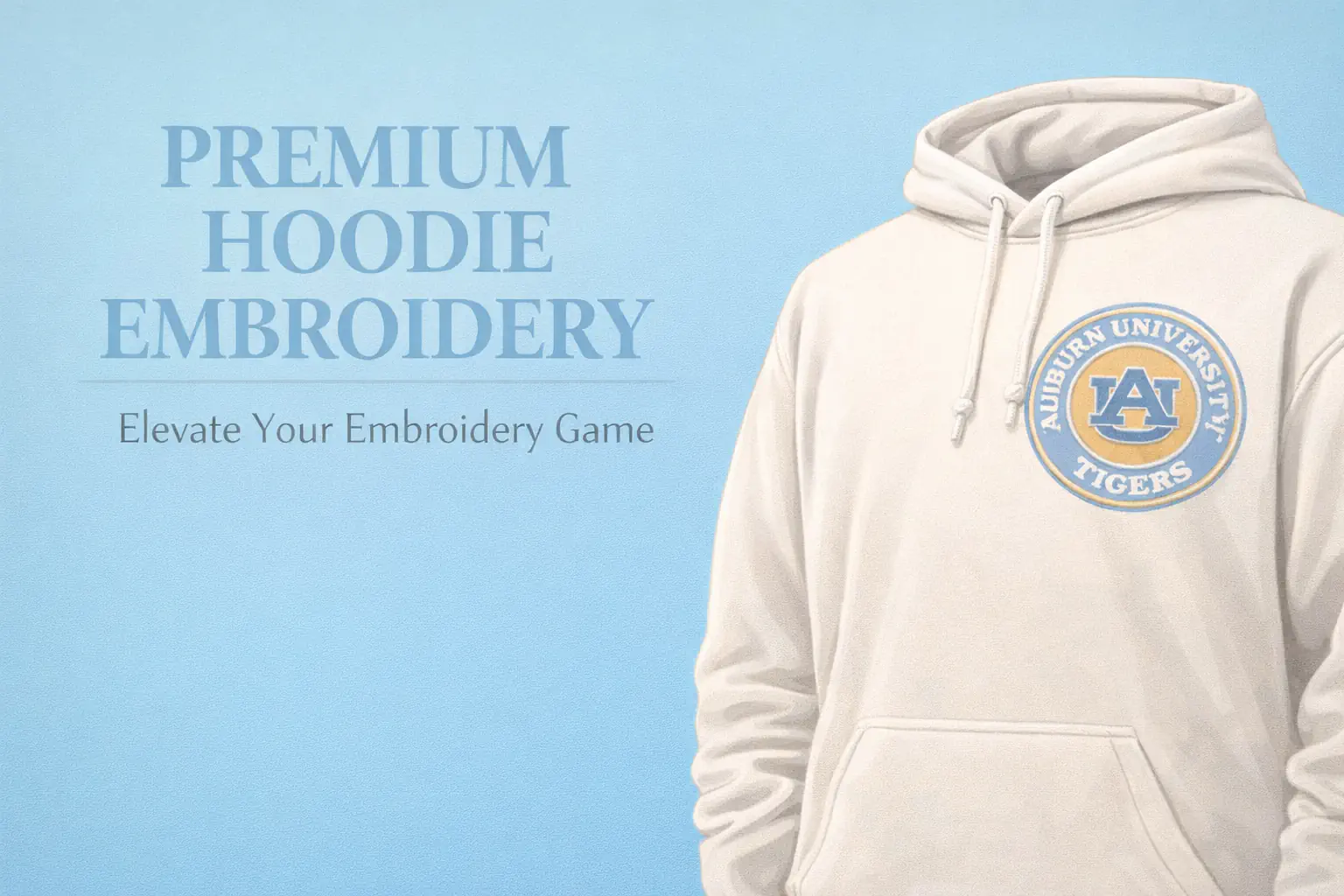
Elevating Heavyweight Hoodie Embroidery to a True Luxury

By diver361 in Embroidery machine practice
· 258 views
How to Make Embroidery on Heavyweight Hoodies Look Truly Premium 👕✨
(From real-world discussion & professional insights ranked by importance)
Creating embroidery on heavyweight hoodies that feels luxury, intentional, and high-end — not just “a logo on a blank” — is far more complex than it seems.
The design file may stitch perfectly. But premium results depend on fabric behavior, construction, stabilization, density control, and placement strategy.
Below is a structured guide built from the discussion — with answers organized by level of importance and enhanced with professional embroidery best practices.
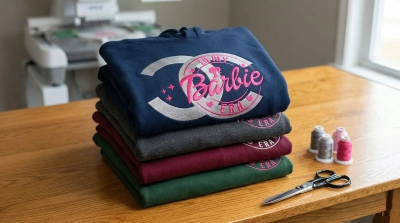
🔥 1. MOST IMPORTANT: Stabilization & Fabric Control
Heavy fleece behaves very differently from lightweight garments. The bulk, stretch, and loft can cause:
Slight pulling
Micro-puckering
Detail loss
Distorted shapes
🎯 Key Adjustments:
✔️ Use stronger cut-away stabilizer
Heavyweight hoodies need firm cut-away backing (2.5–3.0 oz) — not tear-away.
📌 Important: Never rely on tear-away alone for fleece. It allows movement during stitching, which leads to distortion.
✔️ Consider double layering
For large chest designs or dense fills:
1 strong cut-away
1 light secondary stabilizer
This dramatically reduces fabric movement.
✔️ Float instead of over-hooping
Over-stretching fleece in the hoop creates tension — and once released, it puckers.
⚠️ Premium Rule: Hoop the stabilizer tight. Float the hoodie.
🧵 2. Density Adjustments for Heavyweight Fleece
Yes — density must be adjusted.
Heavy fleece already has visual thickness. Overly dense embroidery can:
Feel stiff
Create pulling
Look “patchy” rather than refined
🎯 Professional Tweaks:
Slightly reduce fill density (by 5–10%)
Increase underlay stability
Use edge-run + zigzag underlay combo
Avoid stacking too many layers
💎 Luxury Insight: Premium embroidery breathes. It doesn’t look like armor.
👕 3. Hoodie Construction Matters More Than You Think
Not all hoodies are equal.
✔️ Best for Premium Embroidery:
100% cotton face
Tight-knit surface
Minimal stretch
Pre-shrunk fabric
Structured heavyweight fleece (400–500 gsm)
❌ Harder to Control:
High polyester blends with stretch
Sponge fleece
Brushed ultra-soft interiors
Drop-shoulder oversized fashion cuts
📌 Important: Cotton-face hoodies hold detail better than poly-blends.
📍 4. Placement Strategy: Avoid “Standard Logo Energy”
A premium look often fails not because of stitching — but because of placement.
The basic left-chest 3-inch logo screams “corporate merch.”
🎯 Upgrade Your Placement Game:
Instead of default chest logo, try:
Slightly higher chest placement
Larger but minimal front graphic
Centered minimalist design
Sleeve embroidery (mid-forearm or cuff)
Back neck detail (small, refined branding)
✨ Design Philosophy: Premium feels intentional. Not expected.
🪡 5. Avoiding Puckering on Thick Hoodies
Puckering usually comes from:
Too much density
Poor hooping tension
Inadequate underlay
Excess stitch direction conflict
✔️ Technical Fixes:
Match stitch direction to garment grain
Break large fills into sections
Add more stabilizing underlay
Avoid very large satin stitches on stretch fleece
⚠️ Pro Tip: Let the machine run slightly slower on dense fleece designs.
🧶 6. Managing Bulk Inside the Hoodie
Premium feel includes comfort.
Bulky backing ruins that.
✔️ Solutions:
Trim cut-away close after stitching
Use soft backing where possible
For high-end retail pieces, apply soft covering tape over backing
Consider specialty “no-show mesh” cut-away
💡 Comfort = Luxury. The inside must feel as good as the outside looks.
🧵 7. Why Detail Sometimes Gets Lost on Fleece
Fleece has loft. That fluffy texture can swallow fine detail.
✔️ Fix It With:
Water-soluble topper (especially for fine detail)
Slightly thicker thread for bold designs
Clean satin borders around shapes
Avoid ultra-small lettering
📌 Important: If it looks crisp on flat cotton but fuzzy on fleece — use topper.
🏆 What Actually Makes Embroidery Feel Premium?
It’s rarely one single factor.
It’s the combination of:
✔ Controlled stabilization
✔ Balanced density
✔ Smart placement
✔ Quality hoodie blank
✔ Comfortable interior finish
✔ Clean finishing & trimming
Premium embroidery feels:
Structured
Intentional
Balanced
Comfortable
Durable
Not stiff. Not distorted. Not generic.
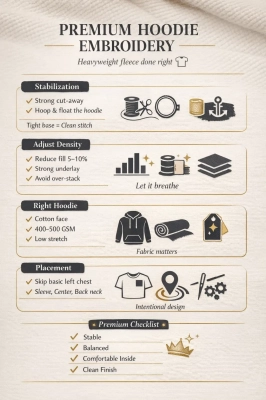
💬 Final Takeaway From the Discussion
Heavyweight hoodies are not just thicker garments — they are a different engineering challenge.
If something feels slightly “off,” it usually means:
You’re treating fleece like a t-shirt.
And it isn’t one.
Recommended Comments