

First try on a machine

By diver361 in Help for embroiderers
· 39 views
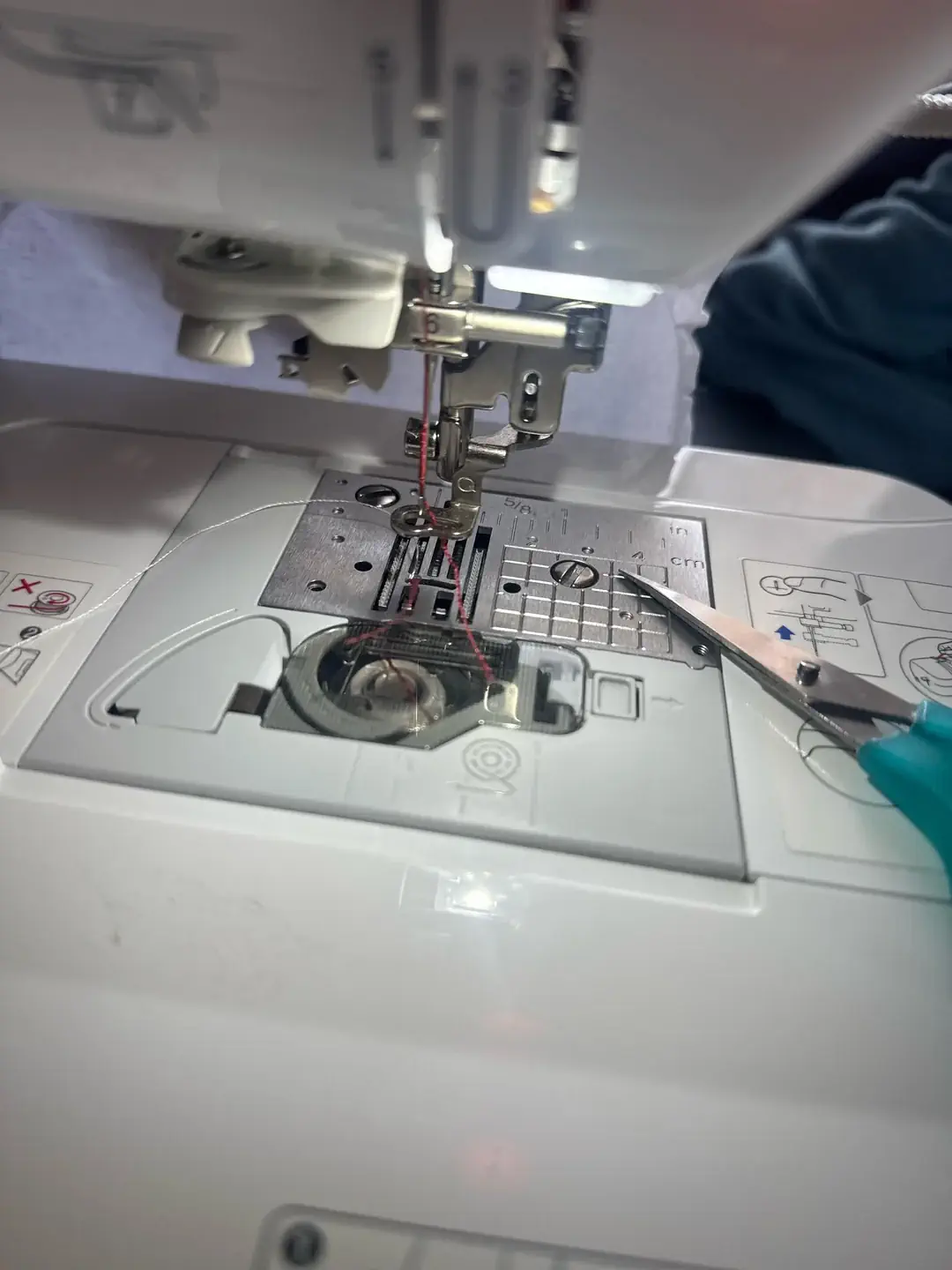
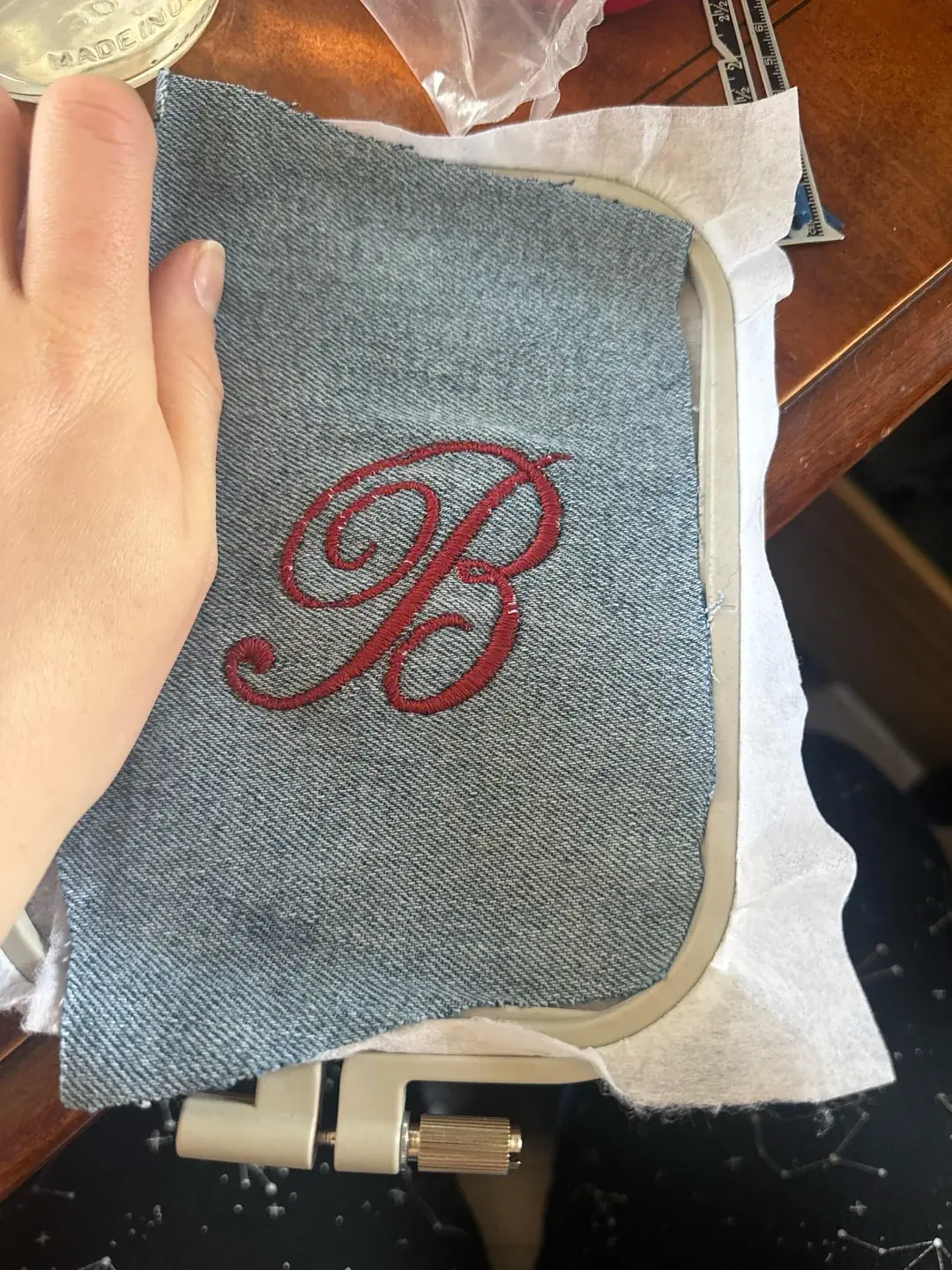
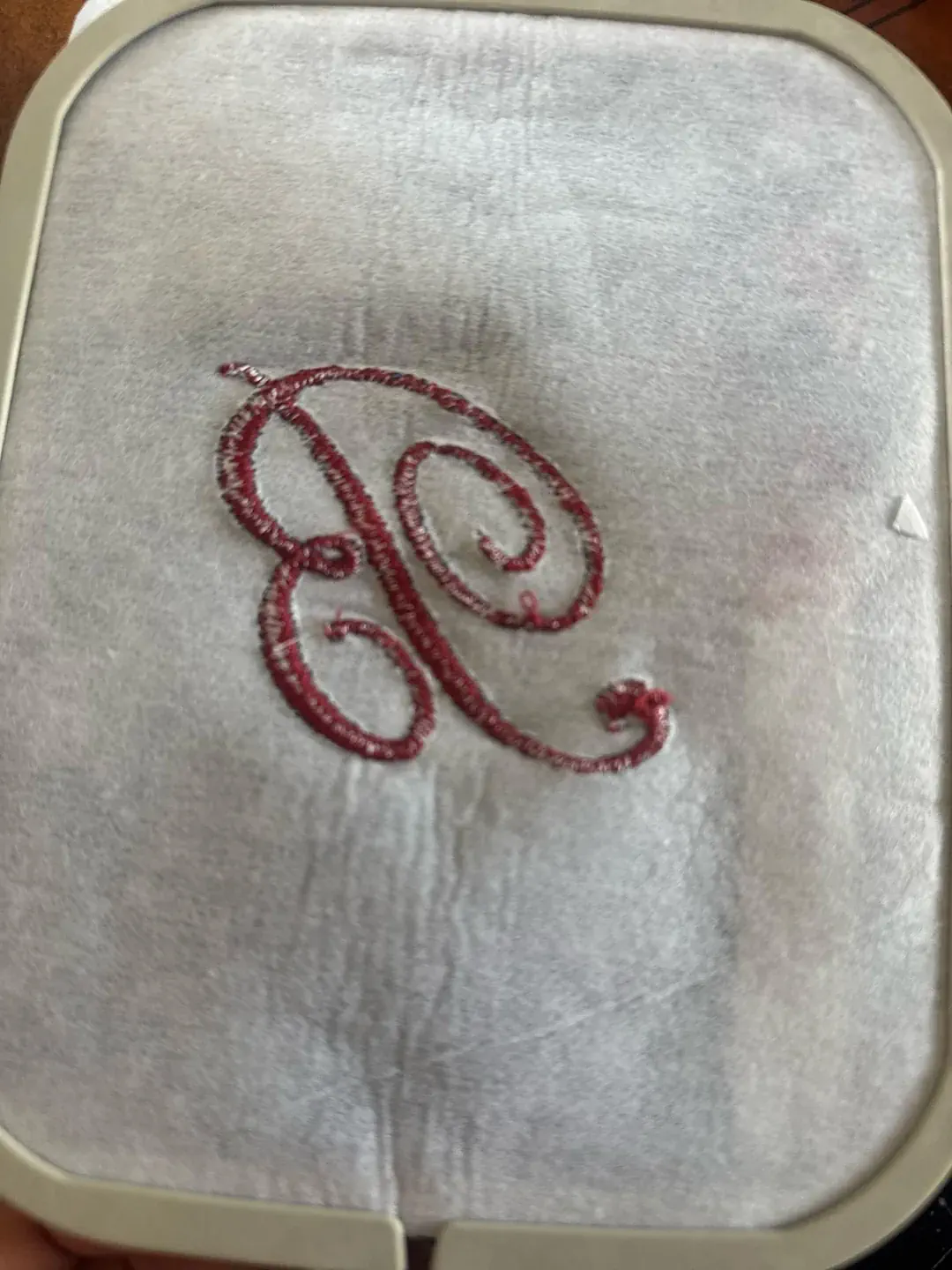
Beginner's first attempt · crimson monogram "B" · denim + tear-away stabilizer
"Not bad for a first try!" — and the community agreed. But they also spotted three things worth fixing. Here's everything they said, explained properly. 🧵
The monogram itself is genuinely beautiful — clean curves, good fill, confident font choice. But the process photos revealed some setup issues that will cause problems on the next project if left unaddressed. Let's go through each one.
"Tension 2.5 — consider adjusting the bobbin tension since it's showing on top."
When bobbin thread appears on the top surface of your embroidery, it means the upper (needle) thread tension is too tight — it's pulling the bobbin thread up through the fabric. This is one of the most common beginner issues and it's very fixable.
The fix: run a tension test on a scrap of the same fabric before starting any real project. Stitch a square of dense fill, remove from hoop, and look at both sides. The top should show only top thread; the back should show only bobbin thread. If bobbin appears on top — lower your upper tension by 0.5 increments until balanced.
Do not adjust the bobbin tension itself — this is a second-order fix and can create new problems. Adjust the upper thread tension first. Bobbin tension should only be changed as a last resort by experienced users.
"Something is causing the needle tension to increase periodically — every once in a while your bobbin thread pulls up on top. The most likely cause is your thread and spool cap combination."
The spool cap is the small disc that holds the thread spool on the machine's thread pin. Most beginners ignore it — and that's exactly when periodic tension spikes appear. Here's the rule:
Mini cone of thread → use the small grey cone-shaped spool cap (included with Brother/Babylock machines). This guides thread smoothly off the cone's sides. Without it, tension fluctuates as thread comes off the bottom vs the top of the horizontally-mounted cone.
Regular spool → use the flat spool cap that's slightly larger in diameter than the spool itself. Never use a cap smaller than the spool — thread catches behind the edge and causes exactly the periodic tension jumps described here.
Look at your spool cap right now. Is it flush against the spool with no gap where thread could sneak behind? If thread can slip between the cap and the spool body — that's your culprit. Switch to the correct cap size and your "random" tension problems will likely disappear completely.
"It looks like you're trying to float this. Honestly, hooping is better 90%+ of the time. I'd suggest going with a smaller hoop size and hooping the fabric itself."
Floating means you hoop only the stabilizer and adhere the fabric on top with spray adhesive. Hooping means you put both the fabric and stabilizer inside the hoop together, clamped firmly.
For denim — especially for a beginner — hooping is almost always better. Denim is heavy and stiff enough to hoop without distortion, and being clamped inside the hoop means it physically cannot shift during stitching. Floating works beautifully for delicate or finished garments where you can't put a hoop mark — but for a practice piece on denim, hoop it directly.
The "smaller hoop" advice is also important: always use the smallest hoop that fits your design with about 2 cm clearance on all sides. A large hoop on a small design creates more leverage for the fabric to drift.
🏆 What actually went right
Font choice is excellent
The cursive script monogram suits denim perfectly — it has enough weight to read clearly on the texture without looking clunky.
Color pairing works
Crimson on mid-wash denim is a classic combination — strong enough to read from a distance, classic enough to not look trendy.
Fill density is good
The letter fills are solid without being rigid — no obvious density issues visible in the finished piece, despite the tension variation during stitching.
Stabilizer choice is correct
Tear-away on denim is appropriate — denim is stable, doesn't stretch, and tear-away will clean up neatly from the dense weave.
📋 Before your next project — checklist
Share your first try — we all started somewhere! 🧵
Recommended Comments